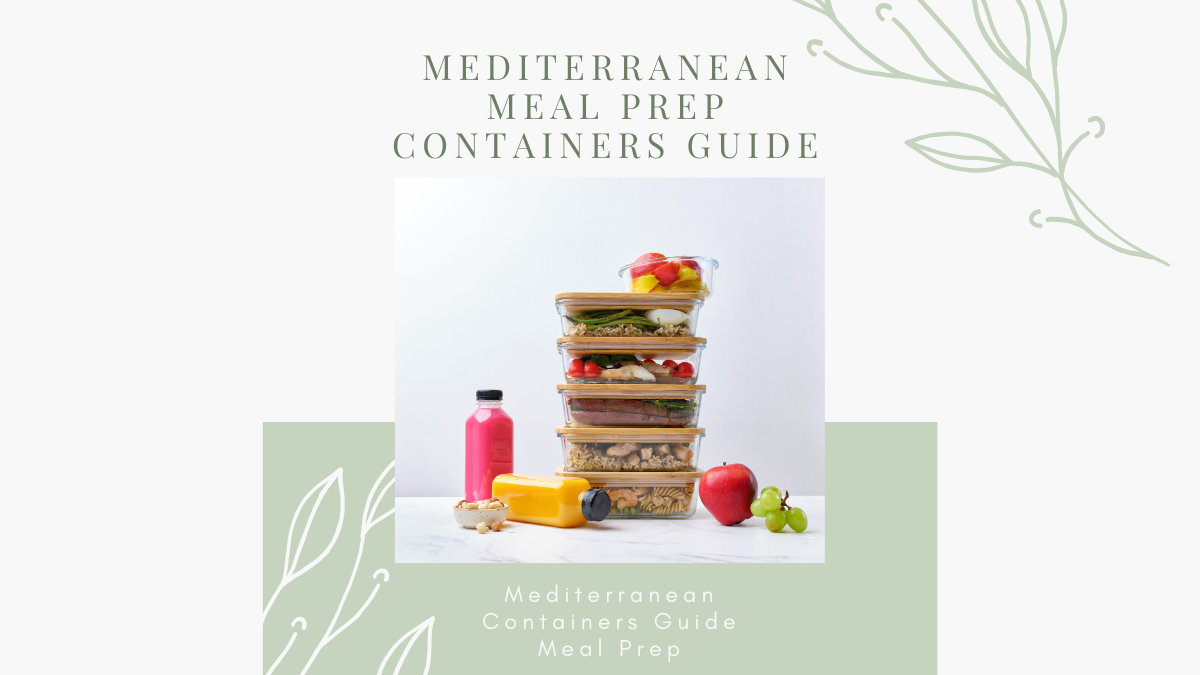
Choosing the right containers is one of the most overlooked parts of Mediterranean meal prep.
You can plan your week perfectly and cook balanced meals, but if your storage system is inefficient, food spoils faster, portions become inconsistent, and your routine feels harder than it needs to be.
If you’re building your foundation, start with our Mediterranean Meal Prep for Beginners guide to understand the full structure before refining your storage setup.
Let’s make your meal prep system practical, organized, and sustainable.
Why Container Choice Matters
Meal prep containers influence:
- Food freshness
- Portion control
- Fridge organization
- Transport convenience
- Long-term durability
When your storage is simple and consistent, it supports your entire weekly structure — especially if you follow a system like our Simple Mediterranean Weekly Meal Prep Guide.
Containers are not just accessories. They are infrastructure.
Glass vs Plastic: What Works Best?
Glass Containers
Best for:
- Reheating meals
- Storing dinners
- Long-term durability
Advantages:
- Doesn’t absorb odors
- Microwave and oven safe (usually)
- More durable over time
Glass works particularly well for recipes used in Mediterranean Dinner Meal Prep, where reheating is common.
Plastic Containers
Best for:
- Work lunches
- Lightweight transport
- Quick organization
Advantages:
- Lightweight
- Often more affordable
- Easier for on-the-go meals
If you prep meals like those in Mediterranean Lunch Meal Prep for Workdays, portability becomes important.
Ideal Container Sizes for Weekly Planning
Having multiple sizes prevents clutter and wasted space.
Recommended basic setup:
- Small containers (250–400 ml) → breakfast jars, sauces, nuts
- Medium containers (500–700 ml) → lunches
- Large containers (900 ml+) → dinners or bulk grains
For example, many options from our Mediterranean Breakfast Meal Prep guide fit perfectly in small or medium containers.
Consistency in size also makes fridge organization easier.
Containers for Breakfast Prep
Mediterranean breakfasts often include:
- Yogurt jars
- Chia pudding
- Egg muffins
- Overnight oats
For these, use:
- Glass jars with lids
- Muffin trays for baking portions
- Stackable small containers
This keeps mornings efficient and predictable.
Lunch Containers for Workdays
For packed lunches, prioritize:
- Leak-proof lids
- Divided compartments (optional)
- Stackable design
This is especially useful when preparing structured lunches like those in Easy Mediterranean Lunch Ideas You Can Prep in Advance.
Good transport containers reduce stress during busy days.
Freezer-Safe Containers
Some Mediterranean meals freeze well, especially:
- Cooked grains
- Legume-based dishes
- Soups and stews
When freezing:
- Leave space at the top
- Use airtight lids
- Label with date
For exact timing guidance, review How Long Mediterranean Meal Prep Lasts in the Fridge to understand storage differences between fridge and freezer.
How Many Containers Do You Really Need?
You don’t need 20 matching containers.
Start with:
- 5–7 medium containers
- 3–4 small containers
- 2–3 larger containers
That’s enough to support breakfast, lunch, and dinner for several days.
Keep it simple and expand gradually.
If budget is a concern, combine this with strategies from Mediterranean Meal Prep on a Budget to avoid overspending.
Organizing Your Fridge for Efficiency
Containers work best when paired with organization.
Tips:
- Store breakfast items together
- Keep cooked grains on one shelf
- Stack similar container sizes
- Label prep dates
A structured fridge makes weekly planning easier and reduces waste.
How Containers Fit Into Your Full Meal Prep System
Once your container system is organized:
- Breakfast becomes consistent
- Lunch prep becomes faster
- Dinner reheating becomes easier
- Food waste decreases
Everything connects back to preparation.
When paired with your pantry foundation from Meditanean Meal Prep Pantry Essentials, containers complete the infrastructure of your system.
Final Thoughts
Mediterranean meal prep containers are not about perfection or aesthetics. They are about consistency.
When you use reliable, properly sized containers, your weekly structure becomes easier to maintain. Food stays fresh, portions stay balanced, and your routine becomes more sustainable.
Focus on functionality first. Variety and refinement can follow.